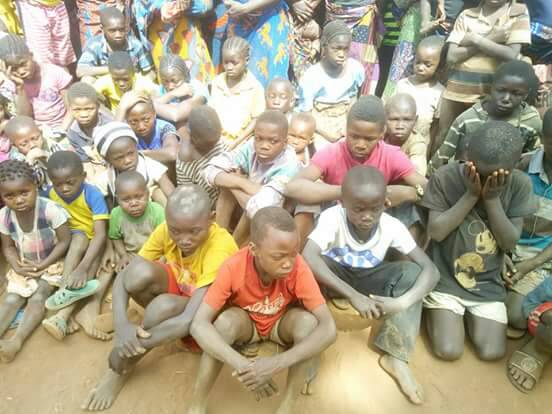
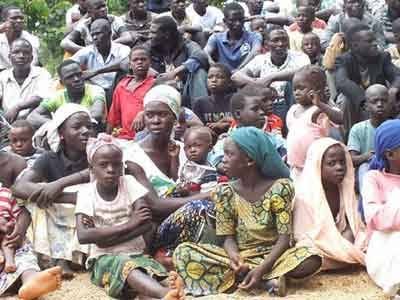
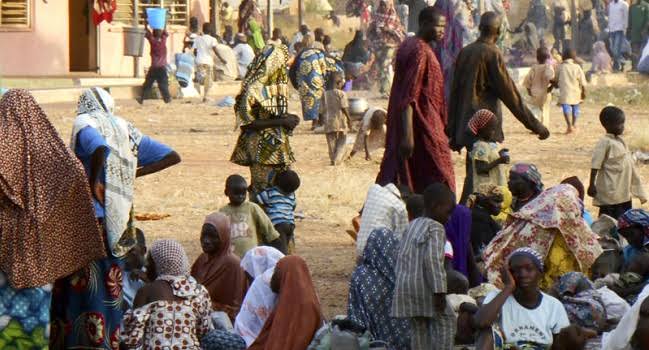
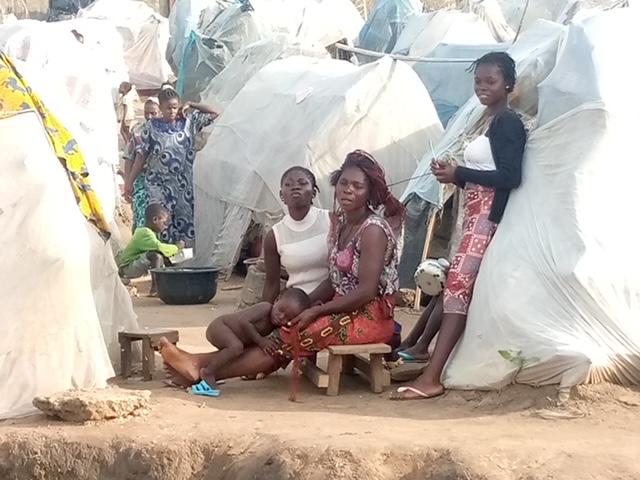
Tag: IDP camp

  • 1.5m Persons In IDP Camps In Benue – Official

    1.5m Persons In IDP Camps In Benue – Official

    Dr. Gabriel Nyitse, Chief of Staff to Benue’s Gov. Samuel Ortom says 1.5 million persons are in various Internally Displaced Peoples (IDPs) camps in the state.

    Nytise made the declaration at the 70th anniversary celebration Thanksgiving Mass of The Knights of Saint Mulumba Nigeria, at the St. Leo Catholic Church, Ikeja, on Sunday.

    Nytise, a knight, noted that banditry had turned majority of farmers in Benue into destitute and could lead to food insecurity in the country.

    “Many of our prime farmers are in IDP camps having been rendered homeless by rampaging bandits.

    “Those are the farmers the state and the country rely on for farm produce; they are languishing in camps, being fed with ration by the state government.

    “The state depends on revenue from farm produce. At the moment we are at a crossroad without the active contribution of those farmers as they cannot access their farms because of fear of being kidnapped,’’ he said.

    READ ALSO: Ekiti: Election Peaceful, Transparent, Free, Fair- Olukere

    Nytise called on Christians to go into politics so as to wrestle power and admonished them not to lose faith, but to continue to pray for God’s intervention in Nigeria.

    The News Agency of Nigeria (NAN) reports that the anniversary is a year-long event that will end on June 4, 2023.

    It will be celebrated nationwide and will be marked by the inauguration of humanitarian projects as well as the enlightening of the public on national issues.

    The theme for the 70th anniversary is: “Appraising the past, redefining the present and reshaping the future.

  • Fire Razes Borno IDPs Camp, Renders Over 100 Homeless

    Fire Razes Borno IDPs Camp, Renders Over 100 Homeless

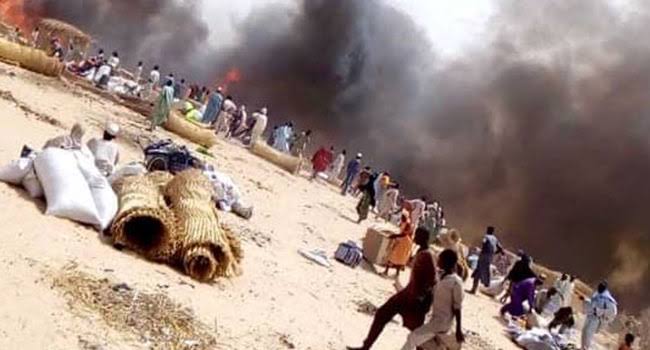
    A strange fire outbreak at the Internally Displaced Persons (IDPs) camp at Gamboru Ngala in Borno has rendered over 100 inmates homeless.

    The fire outbreak which occurred on Sunday evening completely destroyed three mudbrick shelters, 12 makeshift shelters and nine emergency shelters.

    An official of the State Emergency Management Agency (SEMA) in Gamboru Ngala, Malam Yusuf Gulumba, told Daily Trust that an investigation to establish the cause of the fire had already started.

    READ ALSO: 2023: SOME PROVERBS FOR THE NORTH AND TINUBU

    He said a few people sustained minor injuries while trying to put out the fire, adding that no life was lost.

    Gulumba called on federal and state governments to provide food and non-food items as well as shelters for the victims to address their immediate needs.

    According to Daily Trust, Gamborun Ngala camp has a population of over 40,000 IDPs and last witnessed such an incident in April 2019.

  • How Herdsmen Attacks Have Increased Number of Orphans, Child Labourers In Benue

    How Herdsmen Attacks Have Increased Number of Orphans, Child Labourers In Benue

    At an age when most children sleep beside their parents on a well cushioned bed, enjoying their comfort, 10 year old Chiahemba (not real names), has no parents. He has also lost the comfort of sleeping on a bed. He lays wide awake, full of worries and strategizing where to head to as soon as day breaks. He does not go to school like other kids and hardly knows where the next meal will come from.

    “My mother is dead. My father is also dead. I live with my uncle and he is not always around,” Chiahemba managed to say when he spoke to this reporter.

    According to him, his father and some of his relatives were killed in one of the numerous attacks on his community in Guma local government Area of Benue state in 2018.

    His mother, having been displaced, decided she will run back to his kinsmen with her children. “But while we were in my mother’s village, they killed my mother when she went to the farm,” teary Chiahemba said with his head bowed down.

    He was, however, given out to come live with one of his uncles in Makurdi with a promise that he will be sent to school; a promise that was never kept after all.

    Back in Makurdi, the uncle hardly stayed at home to watch over him as he left home as early as 5:30a.m for his “okada” riding business and returned late, sometimes, at 10p.m when young Chiahemba would have gone to bed.

    He began to skip meals doing 1-0-1 and later 1-0-0. “When I came, my uncle will give me money for morning food. I go wait for him to come for night before I go eat again, sometimes, before he go return from work I don sleep and I dey sleep hungry sometimes,” he managed to say in pidgin English.

    Chia, as his friends call him, looks naive but has become street smart after staying for some time and making a couple of friends, some who went about picking plastic bottles for sale. Chia had heard stories of his mates making money from picking plastics or doing other menial jobs in markets and other places and decided to try his luck.

    As the day is breaking and marketers begin to throng the market for the day’s business, Chiahemba is already by the market. It became a routine and from day to day he helped marketers clean their stall, pack and throw out the dirt from their shops. He earned very little from it as his employers could pay him as low as N20 to N50 depending on the size of the dirt. “When I enter market I go beg them to allow me throway their dust bin. Sometimes they give me N20, N50. The highest is N100. Sometimes I earn between N300 and N350,” he said.

    The 10 year old is one of the numerous Benue children who have been displaced, orphaned following herdsmen attacks on communities in the state. Investigations carried out by The Next Edition reveals that while thousands of households were displaced during the attacks, among them children, a good number of the children have been orphaned.

    The investigation also revealed that most of the children have taken to labour; house cleaning, refuse clearing, fetching of water, wood hewing. among others, to provide for themselves and/or cater for their younger siblings, a development many described as worrisome.

    According to data from the Benue State Emergency Management Agency (SEMA), Makurdi, cumulative data of Internally Displaced Persons (IDPs), living in official, unofficial camps and host communities in the state for 2018, 2019, 2020 and up to September 2021 is 1,597,000. The record shows that out of this number, a total of 649,109 are children (193,243 aged 0-5years and 455,866 between ages 6-17years).

    In a breakdown, SEMA recorded the while 249,070 children (85,626 aged 0-5 years and 159,444 aged 6-17years) were displaced by the end of 2019, by June 2020, 43,761 children (11,087 of 0-5years and 32,674 of 6-17years) were further displaced in renewed attacks in Kwande, Obi and Guma LGAs. By December, 2020, the agency, in an update, further reported that as a result of sustained attacks in Guma, logo and Makurdi LGAs, 51,775 other children, (17,254 children of 0-5years and 34,521 children of 6-17years) got displaced. The report also stated that between May and September 2021, 308,503 displaced children (79,276 of 0-5 years and 229,227 children of 6-17years) are living in host communities in the state. The report, however, did not state the numbers that have lost both parents.

    Describing the situation as alarming, a member of the Civil Society Organization in the state, Mrs Helen Teghtegh lamented that quite a large number of children has been displaced, majority of them orphans following herders’ attack on communities in the state.

    She said more worrisome is that most of the children are being forced into child labour for survival.

    “With the current economic situation of the ordinary man on the street, survival is very critical especially for IDPs. For those who have children who are about 9-10-11 years, under 18, they are looking for alternatives just for survival. Most parents would gladly give out their children as house help. We are recording early child marriages, trafficking and child labour as a result of the hardship. So, I am confirming that it is happening. More children are orphaned and child labour is ongoing which is against the child rights law.

    She described as unfortunate the fact that Benue, having passed the law, had not activated it. “Even if you catch these people, you can’t prosecute them. They keep going free. It’s heart breaking,” she noted.

    Teghtegh who is the Executive Director of Community Links and Human Empowerment Initiative, (CLHEI), a Non-Governmental Organization, said as a way out people should be aware of the provisions of the law that hiring children below the age of 18 is a crime.

    She further noted that “People are also disguising to give help to the under privileged while they receive services. Why not take the services to the young adults, 18 and above and pay them for their services or do humanitarian service without that child returning any service to you. If you leave out everything, don’t leave out this, that there is a clarion call for the government to activate the child rights law in the state.”

    She maintained that if the law is activated and one or two persons are prosecuted, it will send some signal to the people that the orphans and vulnerable people are not to be exploited.

    Also speaking, President, Women Wing of the Jama’atu Nasril Islam, (JNI), Benue state Chapter, Hajia Hauwa Isah, said the herdsmen killings in Benue state have created much problems by leaving most children without parents.

    “These are children who are supposed to be in school but now they are left to wander around looking for menial jobs for survival. I have seen children who come into town here to clear refuse dumps, farm, clean, clear grass, clean house and wash clothes for people just to find food to eat. We must find solutions to this and the government must take the lead.

    Hauwa Isah called on the federal government to strengthen security in and around the communities and fulfill their promise to rebuild the communities to enable all displaced persons to go back to their homes. She also urged the society to deal passionately with displaced persons especially children and not to take advantage of them.

    READ ALSO: Christmas: NDLEA Seizes 8.3m Tramadol Capsules, 56,782 Bottles Of Codeine

    Meanwhile, Benue State Governor, Samuel Ortom expressed deep worry over the increasing number of orphans in the state, a development he blamed on the incessant attacks by herdsmen.

    Speaking at an event recently, Governor Ortom stated that there are many orphans currently in orphanage homes and in internally displaced persons (IDP) camps who have no hope for the future.

    “Some became orphans because terrorist Fulani herdsmen have killed their parents,” the Governor said.

    The Governor disclosed that three years ago, he and his wife picked up four orphans from Mama Abayol orphanage home and have been taking care of them; even as he urged well-meaning individuals to support orphans and vulnerable children stressing that God would honour such a gesture.

    “I have orphans whom I have trained too. Some bear their parents’ names and some who do not know their parents bear my name. There are many orphans in IDP camps and many of them don’t even know their parents because Fulani Herdsmen came and killed them. You can make an impact in their lives and God will reward you.

    “Those who are taking three square meals should remember the vulnerable people,” he said.

    Ortom who has called on President Muhammadu Buhari severally to find a lasting solution to the insecurity in the country, also recently advised the President to seek opinions of Nigerians with the aim of coming out with a common solution.
  • IDPs In Nigeria Increased By One Million In The Last One Year – Commissioner

    IDPs In Nigeria Increased By One Million In The Last One Year – Commissioner

    The National Commission for Refugees, Migrants and Internally Displaced Persons, says the number of Internally Displaced Persons (IDPs) in Nigeria has increased by one million in the last one year.

    The Federal Commissioner of the commission, Hajia Imaan Ibrahim, made this known while addressing members of the House of Representatives Committee on IDP during the year 2022 budget defence on Monday.

    She said that because of increasing number of IDPs in the country, the commission’s 2022 budget was designed to address the needs of the concerned persons.

    “Furthermore, due to the current unprecedented humanitarian crisis in Nigeria and the alarming growth rate of displacement, the numbers of internally displaced persons have increased.

    “In the past year IDPs have increased by about one million causing the number of displaced persons in Nigeria to rise to a frightening figure of about three million.

    “Nigeria is also host to about 73,000 refugees from 23 countries, with over 500, 000 Nigerians awaiting repatriation from Chad, Niger, Cameroon, Mali, Libya and other countries.

    “The proposed 2022 budget of the commission was put together with the aim of meeting the growing needs of all persons of concern as well as to address the protracted nature of displacement in Nigeria.

    “This is caused by both man-made disasters in the form of the persistent threat of insecurity, violence, insurgency, banditry/kidnapping and ethno religious crisis as well as natural disasters brought about by climate change, famine and the outbreak of the COVID—1 9 pandemic,’’ she said.

    Ibrahim said that the sum of N4.89 billion was approved for the commission of which N705. 45 million is for recurrent expenditures and the sum of N3.38 billion was for capital expenditures.

    The federal commissioner said that as at November, the sum of N8.51 billion was released to the commission for capital and overhead expenditures.

    She said that in the 2022 budget, the sum of N5.74 billion was earmarked for the operations of the commission in the coming year.

    READ ALSO: About 11 Million Nigerians Need Humanitarian Assistance – UN Rep

    According to her, the sum of N1.18 billion is for recurrent expenditures while N4.55 billion is for capital expenditure.

    “This is due to the increase in the number of Persons of Concerns (POCs) across the six gee-political zones and the need for the commission’s presence nationwide.

    “There is need for an increase in our overhead allocation in order to adequately deliver on the mandate of the commission,’’ she said.

    However, the members of the committee raised concerns over the budget, describing it as lacking in details.

    The committee members said that with what was presented before them, it would be difficult for lawmakers to carry out oversight functions to ensure implementation.

    The committee asked the commissioner to provide more details of projects to be implemented in 2022 adding that there would be more interface between it and the commission.

    In his remarks, the Chairman of the committee, Rep. Umar Jega (APC-Kebbi), said that the issue of the budget details was key to in order for the committee to be on the same page with the commission. (NAN)

  • Nwachukwu Reacts To The Economist’s Slurs On The Nigerian Army

    Nwachukwu Reacts To The Economist’s Slurs On The Nigerian Army

    The Nigerian Army has accused a London-based magazine, “The Economist” of trying to denigrate, demonise and destabilise the Nigerian government in its recent article entitled “Insurgency, secessionism and banditry threaten Nigeria.”

    The Director, Army Public Relations, Brig.-Gen. Onyema Nwachukwu, said, in a statement, on Saturday, that the Nigerian army remained a professional, hard-fighting and globally respected institution.

    Nwachukwu said the nation’s army had continued to occupy deserved glorious positions in the comity of global defence forces.

    He said the Nigerian army had distinguished itself as a worthy contributor to global peace and security through regional, continental and international peace keeping and peace support operations.

    Army spokesperson said it was also wrong to denigrate an army that had restored democracies, brought peace to troubled lands and stabilised the sub-region, through dint of hard work, commitment to duty, discipline and professionalism.

    It was the same army that had weathered the storm of terrorism and insurgency in the north eastern part of the country and parts of the Lake Chad region, he said, pointing out that the offending article contained some unimaginable slurs targeted at the Nigerian military and the Nigerian army in particular.

    “Even as the real intention of the otherwise respected Economist magazine in publishing such toxic concoctions weaved up as report on Nigerian Government’s response to the multi-faceted security challenges assailing the country is yet to be unravelled, the source of the article was very clear.

    “It is one of those deliberate falsehoods and noxious narratives orchestrated by a network of detractors and coven of dark forces working very hard to adorn the Nigerian Army in an unfitting garb of infamy.

    “The vile report which the Economist chose to offer to its platform for publication, spared no effort in trying to vilify and rubbish the image, character and reputational standing of the Nigerian army, but failed woefully.

    READ ALSO: Kogi FA Imposes 2-Year Ban On Club, 8 Officials For Beating Referee

    “The Nigerian army is certainly not what the so-called report by the Economist tried to characterize it.

    “Even more ludicrous was the embellishments of the said report by the notorious unprofessional media outlets that were quick to republish the obvious falsehood,” he said.

    Nwachukwu also accused the international magazine of allowing its medium to be used for a “hatchet job” and failing in its effort of finding out the real truth about the Nigerian army, saying that what the magazine and its sources did not know, was that said army had successfully stopped the Islamic States West African Province (ISWAP).

    He said the magazine was misled by those who were uncomfortable with the commitment of army troops in stamping out terrorism, banditry and other violent crimes assailing the country and the West African sub-region.

    According to him, the gallant officers and soldiers of Nigerian army were undeterred, undistracted and totally unfazed by the hare-brained assertions contained in that silly report. (NAN)

  • Insurgency: Borno To Close IDPs Camps By Dec. 31

    Insurgency: Borno To Close IDPs Camps By Dec. 31

    Borno State government says it will close all Internally Displaced Persons (IDPs) camps located within the state capital, Maiduguri, by Dec. 31.

    The State Governor, Prof. Babagana Zulum, made this known while addressing State House correspondents at the end of a closed door meeting with President Muhammadu Buhari, at the State House, Abuja, on Friday.

    He said that the decision to close the camps in Maiduguri was informed by the recent improvement in the security situation in the state.

    According to him, the government has decided to close the camps to enable the displaced persons return to their ancestral homes.

    “I came to brief the President on the efforts made by the Borno State government in ensuring the return of internally displaced persons to their homes.

    “So far so good, Borno State government has started well and arrangements have been concluded to ensure the closure of all internally displaced persons’ camps that are inside Maiduguri metropolis on or before Dec. 31, 2021,” he said.

    According to the governor, arrangements have also been concluded for the safe return of displaced persons, currently residing in neighbouring Niger and Cameroun Republics, in collaboration with the federal Ministry of Humanitarian Affairs.

    “In addition to that, Borno State government is also making efforts in collaboration with the Ministry of Humanitarian Affairs to continue with the repatriation of Nigerians that are living in Minawo camp in Cameroun.

    READ ALSO: ISWAP, Ansaru Bomb Rail Track, Ground Abuja-Kaduna Services

    “Furthermore, on Nov. 27, Borno State government will ensure the resettlement of IDPs that are living in Diffa Province of Niger to Malumfatari, a local government area in Borno State, where now, we don’t have human population, because of the insurgency,” he added.

    Zulum commended the nation’s security agencies for their support and efforts in the restoration of peace to troubled local government areas in the state.

    “To this effect, the Nigerian military is providing all the needed support to the government of Borno State.

    “I am pleased to inform you also that the Chief of Naval Staff has ensured the return of Naval Base to Baga last month,” he said. (NAN)

  • How Poor Toilet Facilities, Inadequate Water Supply Affect Women in Benue IDP Camp

    How Poor Toilet Facilities, Inadequate Water Supply Affect Women in Benue IDP Camp

    It was already late in the morning but Awashima, as she shyly introduced herself, could not come out of her makeshift room.

    Not because she is lazy or doesn’t have what to do. Awashima could not simply come out because she had been soaked in her menstrual flow.

    When her menses started, she said there was no pad or sanitary towel in her room and she didn’t have a spare cloth to improvise and so she slept on while the blood sipped and stained her badly.

    Awashima, 16, is just one of those women with an unusual heavy menstrual flow. That morning, the shame of being seen with blood stains and the thought of where and how she would get water to clean up would not let her step out of her small room.

    Perhaps, if she were home, she would have managed the situation differently but not so at the Tse Yandev IDP camp where she currently lives in the North Bank area of Makurdi, the capital of Benue State.

    The glorified shanty which serves as camp for the displaced citizens is located on a rocky portion of the J.S Tarka University Road, (University of Agriculture).

    Awashima and over 10, 400 other persons who were sacked from their villages by killer Fulani herdsmen have been living in the IDP camp for over 10 months and there is no hope they will be going home any time soon.

    Life in the camp is harsh and dire. The occupants are grappling with so many things but the worst is that the camp has no functional source of water supply and no toilet. The displaced persons answer the call of nature in the bushes.

    While checks by The Next Edition show there are over 1.5 million displaced persons in Benue State, the Chairman of Tse Yandev Camp, Gabriel Yev, said a total of 10,102 persons first moved into the location in December 2020.

    However, he said the number surged to 10,407 following recent attacks in Yelwata, Mbaan, Yogbo, Orogbo in Makurdi and Guma local government areas of the state.

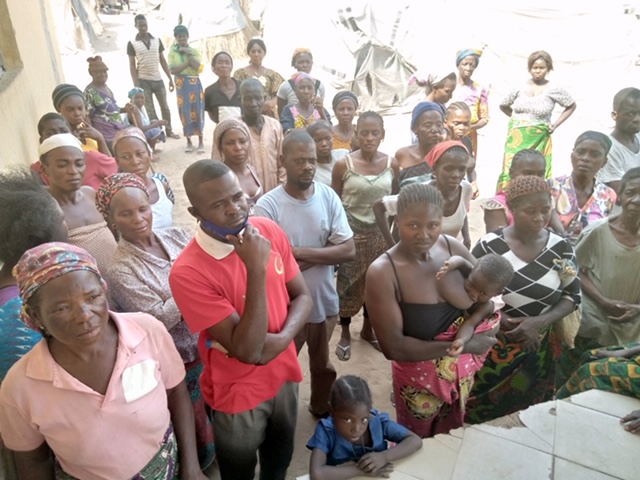
    The number consists of 5,384 households with a total of 3, 457 males and 6, 645 females. A breakdown of the 6, 645 females according to Mr. Gabriel shows that there are a total of 265 females between age 10-14, a total of 282 females within age 15-19, and a total of 2, 930 within age 20 and above.

    The above figures show that the Tse Yandev IDP camp alone has about 3,377 women and girls of menstrual age who have been struggling with poor menstrual hygiene.

    Priscilla Ugbasongo, is married with five children and has been living at the camp during the past 10 months. While she would not speak openly about how she manages during her menstruation, Ugbasong was quick to lament about the inadequate water supply and lack of toilets in the camp.

    “Since I can’t afford pads, I normally use pieces of clothes when I’m menstruating and most times when we don’t have water, I find it difficult to wash the rags,” she told our correspondent.

    “I will pile them waiting for water. Sometimes, they will smell and I will be forced to throw them away and cut new ones. I keep cutting my clothes for this reason.

    “It is also not easy to dispose of the used rags. We don’t have bushes. So, sometimes we dig the ground behind our hut and cover them or throw them across the fence,” said Ugbasong.

    Sharing her experience, a young woman, Patience Iortyom told our correspondent, “When I menstruate, because I don’t have anything, I use pieces of my clothes. We are managing to feed. My mother cannot afford pads or toilet tissues so I cut my clothes. The problem is during the dry season, getting water to wash them is a problem.

    “Back in our villages, we throw them in the pit toilets but we do not have pit toilets to trash them here. We defecate in the open. Now that it is raining, the flood washes everything back to us. Children play around and always catch infection. We need help. We call on the government to help us,” Ugbasong said.

    On her part, Felicia Akepra told our correspondent that she usually stays indoors when she is menstruating to avoid shame.

    “There are many people here. You hardly get a space to even hide to change. Anytime women and girls are menstruating, everyone, especially the men, must know because it is either their clothes will soak with blood or you will perceive foul stench when the girl passes. We need help,” said Akepra.

    She also lamented about the lack of toilet facility, a situation she said forces them to go to the bushes each time they need to use the convenience.

    “We also experience catarrh and cough because of the cold. Most times, when it is raining, we have to leave our huts to the two halls here. We only return to our huts when the ground is dry.

    We are hungry. People have been coming to give us food but the number of people in the camp is higher than the food they bring. After Fulani herdsmen killed our people and drove us from our land, we don’t have any other place to go. Government should come to our aid,” Akepra begged.

    Our correspondent who visited the IDP camp on Monday observed that there was no single toilet facility at the makeshift facility.

    While some occupants were seen bathing in makeshift structures with perforated thatches, many were seen coming from outside the camp where they might have gone to defecate.

    READ ALSO: Caleb University Appoints New Acting Registrar

    Speaking with our correspondent, the Camp Manager, Yev, said the occupants were surviving by the grace of God, adding that neither the state or federal government has supported them.

    “We are surviving just by the grace of God. We survive through support by either churches or NGOs and well-meaning individuals. No government presence here yet. No health facility here yet but we are hopeful that one day, the government will also turn its eyes our way,” Yev told the Next Edition.

    While acknowledging that women and children were suffering the most, Yev said the only toilet facility that will be cited in the camp is still under construction by Doctors Without Borders (MSF).

    “The construction of toilets is ongoing. The NGO has been providing us water through tanks. We have also seen them come to do feasibility studies to sink boreholes.

    “We have a serious malaria outbreak here. There is no proper documentation but over 200 people have had malaria in the last one month. An NGO from Lagos came and gave us N50, 000. We bought N50, 000 worth of drugs on Monday and the drugs finished the same day.

    “Apart from malaria, people also complain of cough and catarrh. A few children had diarrhoea and were treated. It’s not easy, especially when it rains. I tried to relocate some of the pregnant women and children to some of the uncompleted buildings around here but it’s not been easy. If it rains throughout the night, then they would have to stand for as long as the rains last.

    “The Governor has given approval for us to remain here but the State Emergency Management Agency (SEMA) is yet to come here. So, I will like to appeal to the government and other well-meaning Nigerians to come to our aid in terms of food, shelter and medication.

    “Our people are down due to so many ailments. We will be happy if the government can give us attention,” Yev pleaded.

  • Lagos Rescues 728 Beggars, Destitute Persons From the Streets In 7 Months –Commissioner

    Lagos Rescues 728 Beggars, Destitute Persons From the Streets In 7 Months –Commissioner

    The Lagos State Government on Wednesday, said it rescued a total of 728 street beggars, hawkers and destitute persons in the last seven months, the Commissioner for Youth and Social Development, Mr. Olusegun Dawodu, said.

    He told a news conference in Ikeja that the 728 beggars, destitute persons and hawkers, comprising 347 were adult male and 241 adult females, were picked from the streets between January and July.

    He said that the government also rescued children, comprising 64 boys and 76 girls, within the period under review.

    The commissioner said that once they were picked, especially the children, investigations were carried out with a view to contacting their parents or guardians to know why the children were on the streets.

    According to him, beggars on the streets and roads constituted considerable nuisance to law abiding residents, who are entitled to go about their businesses without any fear or hindrance.

    ”As a responsible and responsive government, the Mr. Babajide Sanwo-Olu administration will not fold his arms and watch the state become a haven for beggars. It will take action to curb the menace.

    ”Therefore, to tackle this menace, the Lagos State Government, through the Rehabilitation and Child Development Departments of the Ministry of Youth and Social Development, has maintained a Rescue Unit saddled with the responsibility of rescuing and protecting the destitute and the vulnerable.

    ”This, we do by combing the nooks and crannies of Lagos State to rescue and protect the destitute, mentally–challenged, street children and beggars on the streets.

    ”After being rescued, our Rehabilitation Centres and Child-friendly Homes usually provide them with treatment, psychosocial therapy and vocational training, with the aim of making them useful to themselves and the society,” he said.

    READ ALSO: UAE Excludes Nigeria From List Of 70 Countries Eligible For Visa-On-Arrival

    The commissioner noted that the administration of Gov. Sanwo-Olu had promised residents free movement around the state, without fear or hindrance, and would continue to deliver on it.

    He said that Lagos State had representatives of all the ethnic groups in the nation, with thousands coming into the state daily in search of a better life, saying that this had put on infrastructure and increased societal ills.

    Dawodu appealed to residents to join hands with government in building a prosperous and peaceful society, where all could go about their lawful activities without fear or hindrance. (NAN)

  • IDPs Ask FG To Rehabilitate Them Like Ex-Boko Haram, Niger Delta Militants

    IDPs Ask FG To Rehabilitate Them Like Ex-Boko Haram, Niger Delta Militants

    Mr. Luka Yathuma, the Secretary of Internally Displaced Persons (IDPs) at the Kuchigoro Camp, Abuja, has pleaded with the Federal Government to rehabilitate IDPs like it did with ex-Boko Haram members and Niger Delta militants.

    In an interview with the News Agency of Nigeria (NAN) on Sunday, Yathuma said such gesture would go a long way in enhancing the living standards of IDPs and give them a sense of belonging.

    He said IDPs belonged to the group of poor and vulnerable, as a result of activities of Boko Haram in the country.

    “We are law abiding citizens of the country who don’t want to cause any harm on anyone. And the people that put us in this condition are being rehabilitated, trained in skill acquisition and after that they are empowered.

    “Those of them that want to go to school are being given scholarships to go to school, but what about their victims that are dropping out of school because of the condition they found themselves?

    “We are begging the federal government to also rehabilitate IDPs, provide them with skill acquisition opportunities and scholarships to make their lives better like the ex-Boko Haram members and Niger Delta militants.

    “The reason we are in the camp is because we did not want to join the bad group, but when we see the bad group that made us come here being taken care of, it breaks us down emotionally and psychologically.

    “There is nothing wrong in rehabilitating ex-Boko Haram members, but what about the victims? He asked.
    He wondered why people who were rescued from the den of insurgents and ex-members were being empowered, while theirs victims, like the IDPs were left to wallow in abject poverty.

    READ ALSO: After 3 Days Notice, Lagos Govt. Demolishes Shanties On Lekki Coastal Road

    Yathuma stressed that IDPs were living a miserable live in the camps, and that was not fair.
    “The youths in IDP camps may become tools in the hands of bad politicians and criminal gangs. If the country is not secure, the rich and their wealth will also not be secure.

    “Go inside our tent and see, we lay on bare ground and our children are suffering from cold, malaria and other illnesses. Just recently, about six people died in our camp here in New Kuchigoro as a result of cholera outbreak and no help yet.

    “Our condition is terrible, some rich people will not keep their dogs or chickens in the tent we are sleeping, but it has become our comfort zones, because we have no option.

    “Before we were displaced, most of us had houses, cars, sources of income and means of livelihood, but now we have lost everything. We are emotionally down. It is not easy,” Yathuma said.

    He begged government and kind-spirited individuals to come to their aid, as life had not been easy for the over 1,724 IDPs in the Kuchigoro Camp. (NAN)

  • New IDP Camp Surfaces In Makurdi With Over 800 Households Sleeping, Defecating In The Open

    New IDP Camp Surfaces In Makurdi With Over 800 Households Sleeping, Defecating In The Open

    Over 800 households of Internally Displaced Persons (IDPs) have founded a new camp in Makurdi, the Benue state capital, where they are staying in critical and deplorable conditions.

    The Internally Displaced Persons (IDPs) are camped at Tse Yandev, along the Federal University of Agriculture, Makurdi, (FUAM), road, in Makurdi Local Government Area (LGA) of the state.

    The Next Edition correspondent gathered that the IDPs were ejected by the Chairman of Makurdi LGA, Anthony Dyegye, from a market site near the 72 Army Battalion barracks road to the University of Agriculture road.

    They have been at the new camp since December 10, 2020, to date where their numbers have also continued to swell.

    As at Tuesday morning when journalists visited the camp, the inmates were yet to be profiled by the State government through State Emergency Management Agency (SEMA).

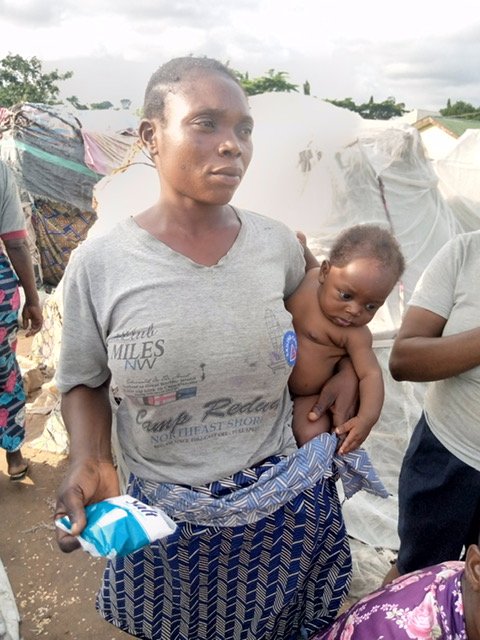
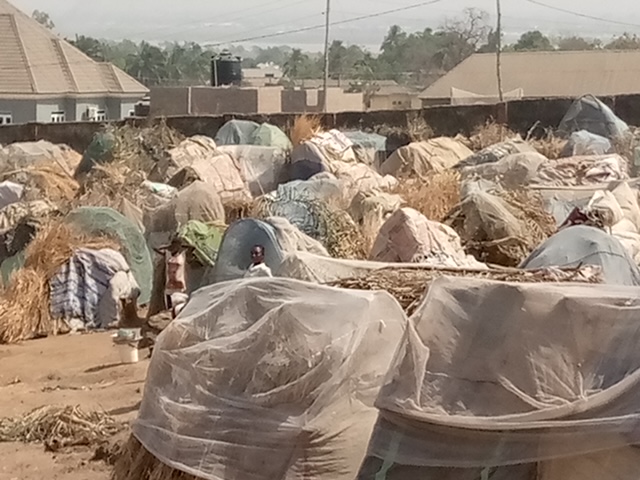
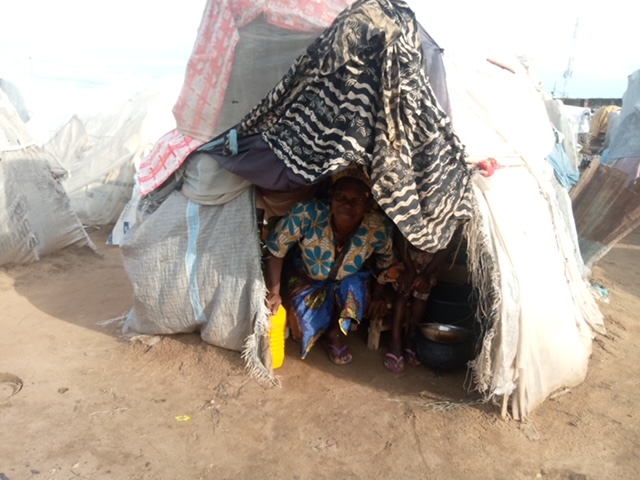
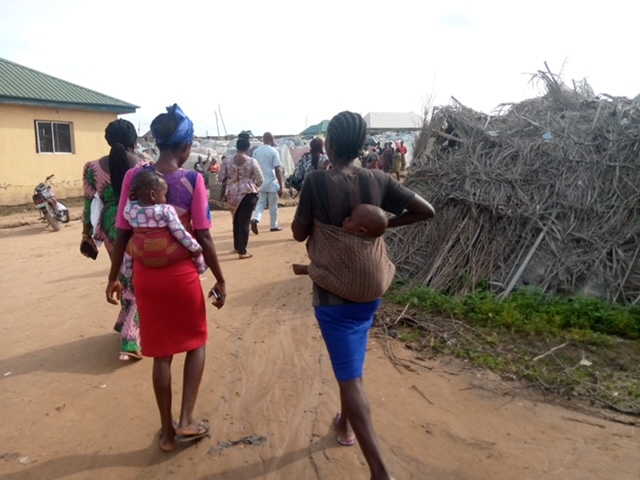
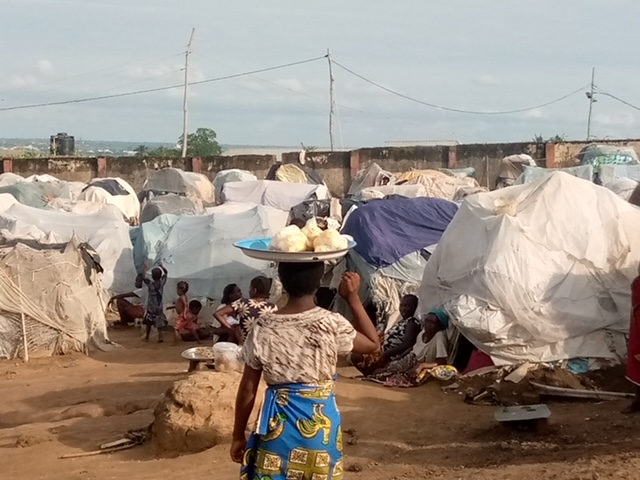
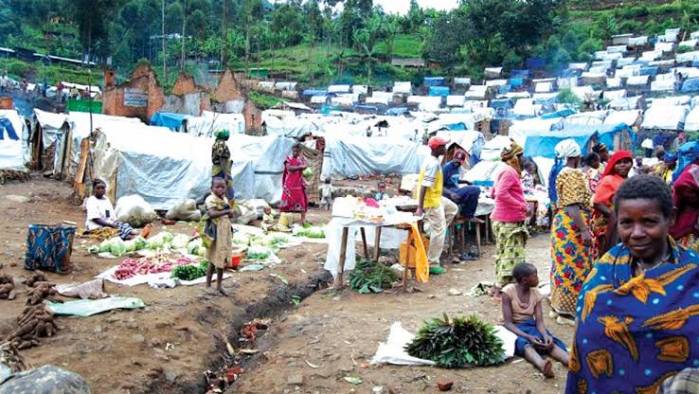
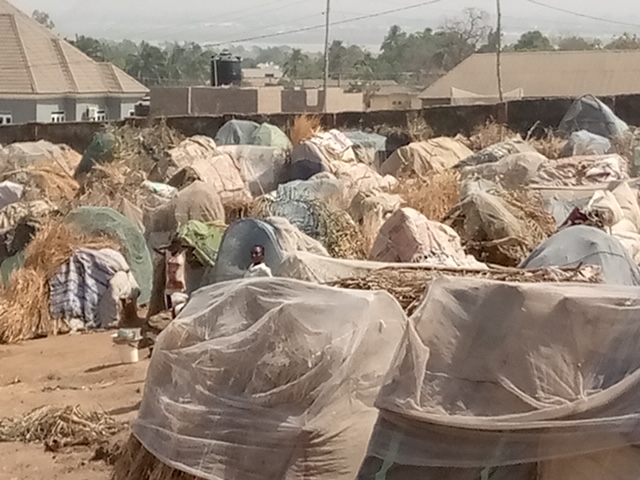
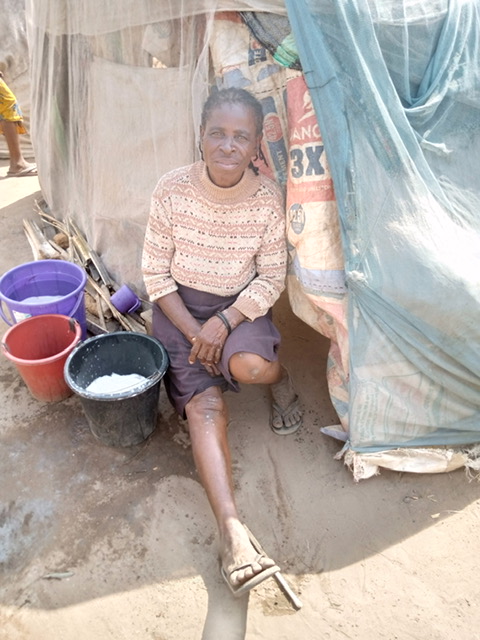
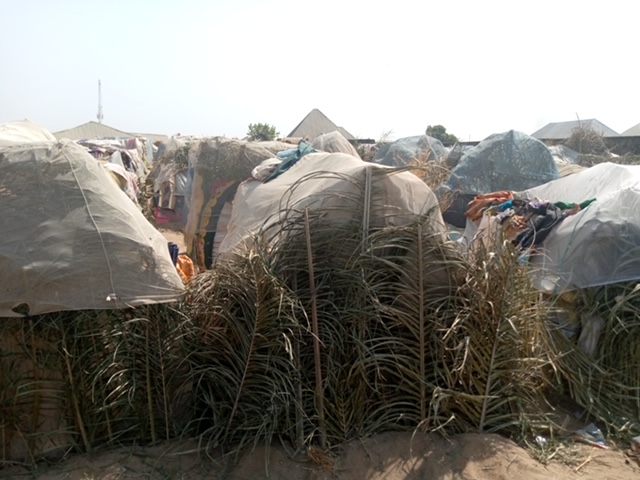
    The Next Edition observed that the displaced persons had no proper shelter except for the makeshift tents they made with palms fronds, sticks, covered with torn rice bags, torn cloths, grasses and torn mosquito nets.

    The shelters are so low that a child of five years could hardly go in without bending down.

    There was neither a water source nor a toilet as they trek into their neighborhood, sometimes, kilometers, to look for water and practice open defecation, a situation that may lead to an outbreak of disease.

    Speaking to journalists, the Chairman of the camp, John Adzenda, called on the state government for urgent assistance.

    Mr. Adzenda said “We were displaced in 2018 and we have been staying along the 72 Battalion Barracks when in December, the Makurdi local government chairman came and told us to vacate the place.

    “When we asked where he is taking us to, he showed us this place that he wanted to use that place to establish a market.

    READ ALSO: 70 Shops Damaged In Lagos Market Fire

    Adzenda who hails from Uvigh council ward, in Guma Local Government Area of the state said “since that January 1, 2018 attack, we have not gone back home. In fact, in my compound as I speak, nobody is there.

    He called on the state government to send them relief materials and also provide them with shelter.

    “We don’t have water here. We just got out there to source for water from our neighbours. To defecate, we dig and bury while many others go out there to ease themselves.

    He said it was by the grace of God that no one has contacted any disease or died since they started staying there adding, “we have women, children and elderly people here and the condition here is not good for anyone.

    “We don’t have shelter, water or toilets. Nothing is here. I can say we are sleeping in the open. I want government to intervene so that we can be a bit comfortable. The rainy season is coming soon and we don’t have a place to stay yet,” Adzenda said.

    In separate interviews, Eunice Kundu, from Obi local government of Nasarawa state and Faith Samuel from Kasuwa Mbagwa in Nasarawa cried out to government to assist them. “Since we came here, we don’t have enough food and our children are not in school”, Faith said.

    The Executive Secetary of State Emergency Management Agency,  SEMA, Mr. Emmanuel Shior, said that government and other partners were working towards meeting some basic needs of the IDPs.

    “We (government) are aware of that camp and we are working with other partners to give them support.

    We are working with ActionAid; they are supporting government in the area of shelter; government is providing security; government is also providing assistance in the area of water while Doctors Without Borders are intervening in the area of Water, Sanitation and Hygeine, (WASH), he said.

  • Herders/Farmers Conflicts: Benue Govt Laments Pockets of Attacks, Says 500,000 IDPs Still In Camps

    Herders/Farmers Conflicts: Benue Govt Laments Pockets of Attacks, Says 500,000 IDPs Still In Camps

    Benue State Government has lamented recent attacks on Benue farming communities following continued activities of suspected herdsmen in the state.

    The Executive Secretary of State Emergency Management Agency, (SEMA), Mr. Emmanuel Shior who spoke to members of the Correspondents’ chapel, in his office, said there are still pocket of attacks on some Benue communities, especially those on the river banks.

    He said the communities include Torkula and Iordye in Guma local government area, Obi LGA, parts of Agatu as well as Moon community in Kwande. “As we speak now, most people have left their homes and are currently staying in Jato Aka”, he said.

    Shior noted that there are over 500,000 IDPs in the state taking shelter in eight Internally Displaced persons IDP camps in the state while many others are living with relatives in the neighbouring communities.

    He regretted that the continuous attacks and killings has made it difficult for government to close the camps and allow the IDPs to return to their ancestral homes and appealed to the federal government to improve on the security in the hinterlands.

    He said government is, however, working out modalities to better care for the IDPs just as they have put in place an IDP Disengagement plan to return them back home.

    READ ALSO: Lecturer Shoots Wife, Commits Suicide In Kaduna

    He said the IDPs, who are majorly farmers, have stayed in the camps for more than two years and their continued stay of over 500,000 farmers in camps will lead to major food and other forms of crisis in the country.

    Shior appealed to the federal government to make real their pledge of N10billion reconstruction fund to states to enable Benue government to rebuild and relocate the IDPs back home.

    He noted that the state is also grappling with catering for the Cameroonian refugees.

    According to him, the international laws on refugees, requires that “once they are here, we cannot drive them away. The federal government is working hard to take care of them but as the host state, we are required to provide them with land for their shelter and farming activities and government has done that but we need help to be able to provide for their needs,” Shior said.

  • MBF Hails Sule Over Return Of IDPs To Ancestral Homes

    MBF Hails Sule Over Return Of IDPs To Ancestral Homes

    The Middle Belt Forum (MBF) has commended the governor of Nasarawa State, Engr. Abdullahi A. Sule, for the peaceful return of Internally Displaced Persons (IDPs) to their ancestral homes in various parts of the state, including Gudi, the governor’s home town.

    Speaking during a courtesy visit on the traditional ruler of Gudi, who is also the father of Governor Sule, His Royal Highness, Alhaji Sule Bawa, the Deputy National President, Engr Tanko Baba Abdullahi, who led the MBF team, commended the governor for demonstrating unprecedented commitment towards peaceful co-existence of all ethnic groups in the state.

    The delegation told the Sarkin Gudi that they were in his palace to express happiness at the recent return of Tiv communities that were sacked, following the outbreak of a crisis that rocked the town.

    READ ALSO: Zulum Donates House, N20m To Bako’s Widow, Children

    “We are happy that we have someone in the person of Governor Sule who indeed has proven to be a true father to all ethnic groups living not only in Gudi, but also various parts of the state.

    “We are also grateful to the Almighty God that as the father to Governor Abdullahi A. Sule, you have always offered him a fatherly advice which we believe eventually facilitated the peaceful return of Internally Displaced Persons (IDPs) to their sacked villages.

    “We thank and commend Governor Sule for this achievement and we are proud of him as a true democratic leader for all ethnic nationalities living in Nasarawa State.

    “The Middle Belt Forum is also proud of Your Royal Highness and we are also greatly inspired by your passionate pursuit of peace for all ethnic groups living in Gudi,” Abdullahi noted.

    President of the Southern Kaduna Peoples Union (SOKAPU), Hon Jonathan Asake, lauded the monarch for standing up for his subjects and working towards the resettlement of displaced people in his domain.

  • Flood: VP Osinbajo visits IDP camp in Rivers, calls for immediate intervention

    Flood: VP Osinbajo visits IDP camp in Rivers, calls for immediate intervention

    Vice President Yemi Osinbajo on Friday landed in Ahoada West for an on-the-spot assessment of Okogbe Camp where people displaced by flood in Rivers are currently taking refuge.

    The News Agency of Nigeria (NAN) reports that the vice president flew to the camp in a helicopter after landing at the Port Harcourt International Airport where he called for immediate intervention.

    He said that he was in the area to assess the extent of damage, understand the nature and enormity of the disaster for the Federal Government to “react appropriately.’’

    According to him, the extent of flooding in homes and most villages indicate that the disaster is enormous.

    “We over flew the whole of Ahoada West and we saw so much of the damage and disaster.

    “Most homes, most of the villages are under water and it is very clear this is a disaster of enormous proportions.

    “No doubt there is need for immediate intervention as I thank the state government for what they have done so far in trying to curtail the problem.

    “Fortunately NEMA has also been working very hard alongside the state emergency agency. Myself, the Minister of Environment and the Director-General of NEMA are here to see things for ourselves,’’ he said.

    He promised that the federal government would give all the support necessary to ensure the comfort and proper resettlement of the IDPs.

    READ ALSO: Brazil to pump $1.1b into Nigerian agriculture – Envoy

    “I am glad to say Federal Government will give all the support necessary to ensure that you are as comfortable as possible under the circumstances here.

    “More importantly, to also ensure that you are resettled properly when in the next few weeks you are about to go back home,’’ he said.

    Osinbajo also assured them that the federal government regarded the resettlement phase as very important aspect of its intervention.

    He said: “we will be talking to see how we can effectively work with the state government to resettle all of you back in your homes and also to plan for the future.

    “We think this cycle of flooding must not be allowed to continue. There must be a way of checking these constant circles of flooding.

    “Part of what we need to do is build more canals, dredge these rivers not to overflow all the time and ensure that estuaries and other small water bodies are not filled with solid waste to allow free flow of water.”